Publications
The Injustice of Fairness
-
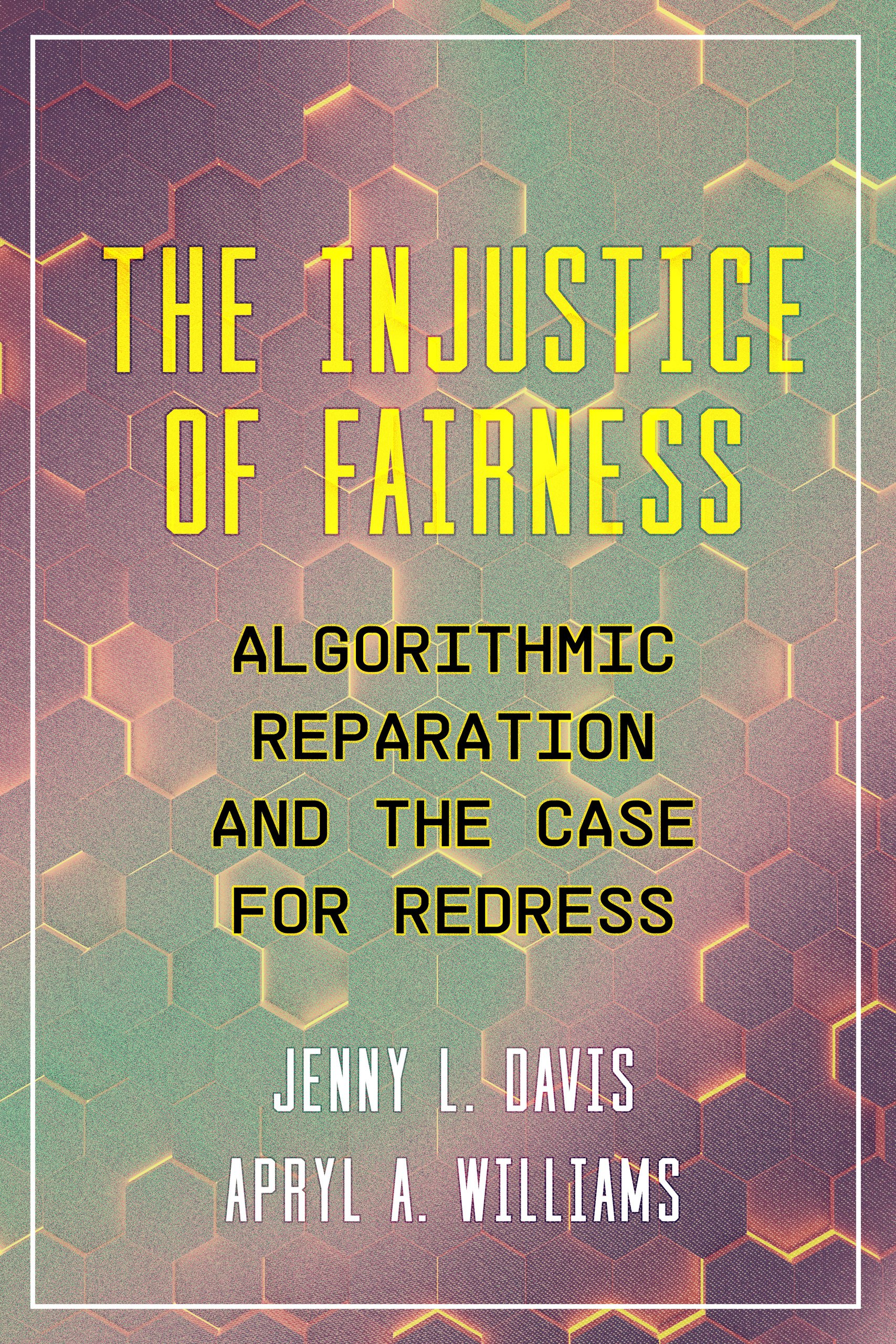
The Injustice of Fairness shifts the foundation of algorithmic ethics, displacing “fairness” with repair and redress. A substantial and growing field, algorithmic ethics aims to mitigate harms and realize social good. The fairness paradigm dominates this field across AI, machine learning, and other data-driven domains. So far, efforts toward fairness have been unsuccessful, with algorithmic harms that propagate and persist. Jenny L. Davis and Apryl A. Williams explain why algorithmic fairness perpetually fails and present “algorithmic reparation” in its place.
The stakes are high because algorithms are everywhere—from law to love, healthcare to housing, education to media, and beyond. More than lines of code or mathematical operations, algorithms carry history, configure the present, and are actively shaping the future. Set against a backdrop of societal instability and technological transformation, The Injustice of Fairness offers a careful critique, original framework, and blueprint for social change with algorithms as entry points and levers.
-
Introduction
Part One
1. What's Wrong with Fairness?
2. Toward a Reparative Research Program
Part Two
Interlude: Speculative Design for Reparative Algorithmic Futures
3. Speculative Design I: Pik | A Reparative Dating App for Black Women and Femmes
4. Speculative Design II: The Power-to-Prove Legal Paradigm
Part Three
5. Obstacles and Inroads
Conclusion
Acknowledgments
Notes
Bibliography
Index
-
"Brilliant and inspiring, this book moves us from the broken paradigm of algorithmic fairness to algorithms for reparative movements. From rethinking employment antidiscrimination law to concrete analyses of the obstacles to algorithmic reparation, this book offers us ways to achieve lasting social change. The Injustice of Fairness provides a way to get over AI doom and build the future we want."—Wendy Hui Kyong Chun, Canada 150 Research Chair and Director of the Digital Democracies Institute, Simon Fraser University
"Radical but reasonable, this imaginative and persuasive book pops the ‘algorithmic fairness’ bubble. It offers not only a searing critique of current algorithmic systems but also an exciting, expansive vision for a world where these systems no longer harm, repairing how we love, work, and keep each other safe."—Aymar Jèan Escoffery, author of Reparative Media: Cultivating Stories and Platforms to Heal Our Culture
"Moving us through the theoretical into the urgent practice of repair, The Injustice of Fairness points scholars and practitioners toward remaking and reinventing technologies as pathways to liberation. A truly compelling and critical look at how we shape the future of algorithmic justice."—Catherine Knight Steele, author of Digital Black Feminism
Not My Type
-
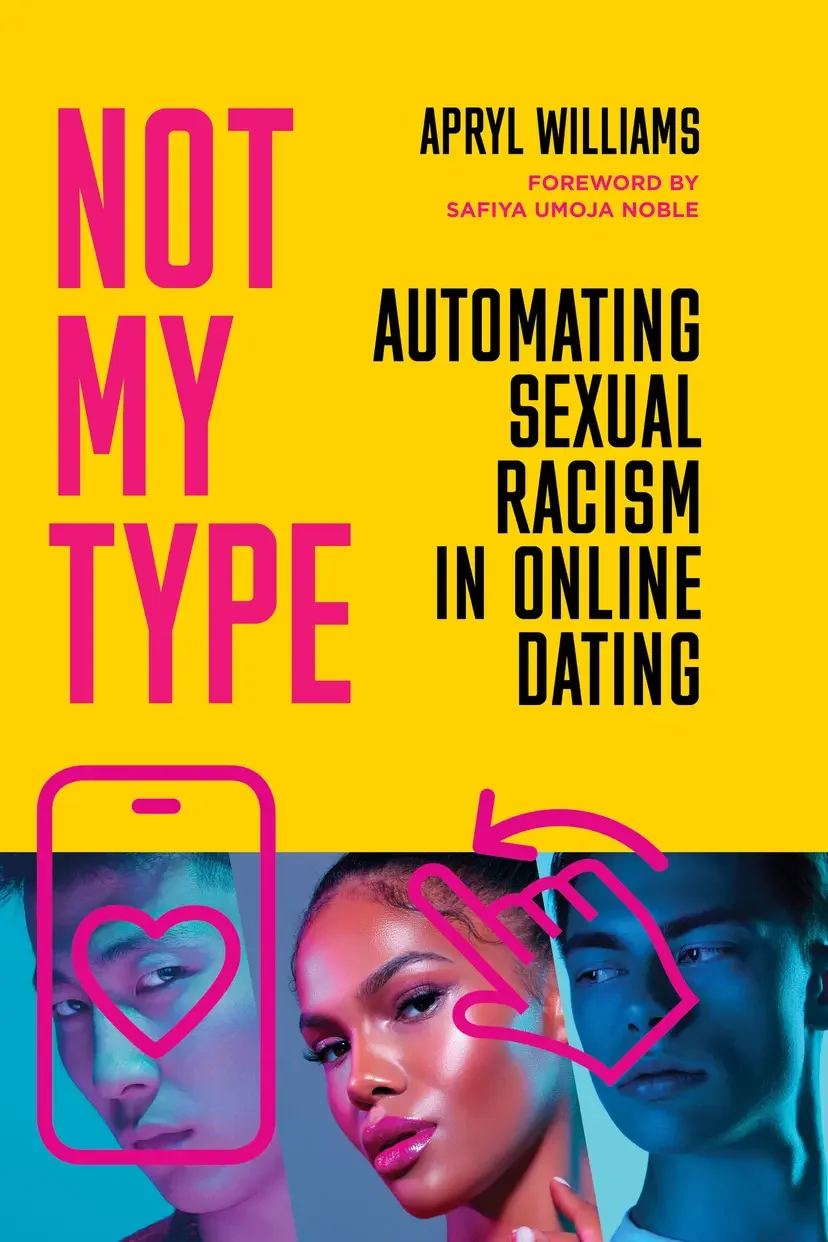
In the world of online dating, race-based discrimination is not only tolerated, but encouraged as part of a pervasive belief that it is simply a neutral, personal choice about one's romantic partner. Indeed, it is so much a part of our inherited wisdom about dating and romance that it actually directs the algorithmic infrastructures of most major online dating platforms, such that they openly reproduce racist and sexist hierarchies.
In Not My Type: Automating Sexual Racism in Online Dating, Apryl Williams presents a socio-technical exploration of dating platforms' algorithms, their lack of transparency, the legal and ethical discourse in these companies' community guidelines, and accounts from individual users in order to argue that sexual racism is a central feature of today's online dating culture. She discusses this reality in the context of facial recognition and sorting software as well as user experiences, drawing parallels to the long history of eugenics and banned interracial partnerships. Ultimately, Williams calls for, both a reconceptualization of the technology and policies that govern dating agencies, and also a reexamination of sociocultural beliefs about attraction, beauty, and desirability.
-
Introduction
1. A New Sexual Racism?
2. Automating Sexual Racism
3. I'm Just Not Comfortable with Them: The Myth of Neutral Personal Preference
4. I've Always Wanted to Fuck a Black or Asian Woman: Being Racially Curated in the Sexual Marketplace
5. Safety Thirst: Who Gets to Be Safe While Dating Online?
Conclusion: All You Need Is Love (and Transparency, Trust, and Safety)
-
"[A] troubling investigation of structural racism in online dating platforms.... Williams's highly accessible narrative is made extra intriguing by the liberal inclusion of users' own words sharing their intimate thoughts."—Publishers Weekly
"From the automation of white beauty standards to the chilling prevalence of racist abuse in private messages, Williams reveals the harms created when racism, technology, and romance interact."—Angéle Christin, author of Metrics at Work
"This book changes how we think about the sociology of the 'real world' in dating by taking seriously the online world where so many of us find love forever or just right now. Apryl Williams shows us a new, better way to do digital sociology, and her writing makes for a compelling read."—Jessie Daniels, author of Nice White Ladies
"Not My Type is a timely, insightful book that demonstrates the importance of critical evaluations of Internet technology and its profound impact on individuals' everyday lives."—Sarah Adeyinka Skold, Sociology of Race and Ethnicity
"Not My Type is an intriguing work that compellingly examines the importance of excavating the inherent Othering enabled by and proliferated through online dating platforms."—Golden M. Owens, Catalyst
"Not My Type is a vital work that exposes the power dating platforms wield in gathering user data to automate sexual racism.... By demystifying these hidden processes, [Williams] urges users to recognize the forces at play in digital dating and to strive for more conscious and equitable interactions."—Nikoo Karimi, Feminist Media Studies
"Not My Type is a fierce indictment of the existing practices of dating service providers and the harm they inflict on numerous users. It is an impressive book that bridges multiple disciplines and data sources to interrogate the digital architecture of the dating market."—Ken-Hou Lin, American Journal of Sociology
"Not My Type is an exemplar of accessible and passionate writing—Williams empathetically connects difficult lived experiences of sexual racism to scholarly work in Critical Internet Studies and Black Feminist Thought to critically interrogate the relationship between society and intimacy platforms."—Nadia Karizat, Critical Studies in Media Communication
Selected Articles
Get In Touch
Interested in consulting, collaboration, or just have questions about my work? Whether you're a researcher, journalist, policymaker, or industry partner, I want to hear from you. Fill out the form and I’ll be in touch.